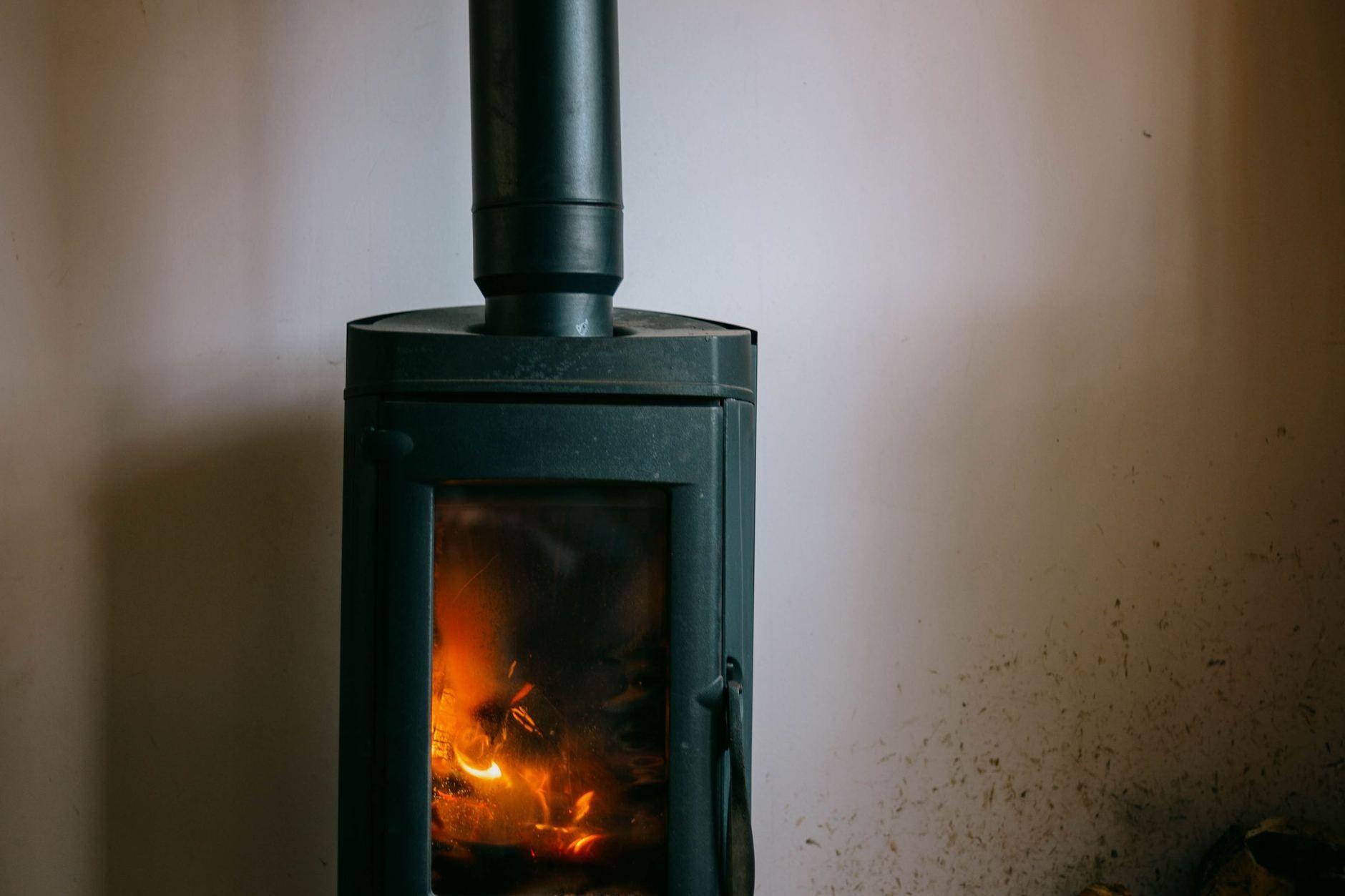
The stain, and then the quote
Westminster does not get much rain, and that is the trouble. A chimney can leak for years in a climate with only a few wet months, because each winter's damage dries out before anyone looks closely. Then a wetter season arrives, a brown patch spreads on the ceiling near the fireplace, and soon you have a roofer's quote, a chimney company's quote, or both. They rarely agree on what is leaking.
We publish a range for this work: $595 to $3,550 for tracing a chimney leak and repairing its source. Below is why the range is that wide, what puts a job near one end or the other, and how to read a leak quote you may already be holding.
Why leak quotes disagree
A stain shows where water ended up. It says very little about where the water came in. Rain that enters at the top of a chimney can travel down the outside of the flue tiles, along a rafter and across the back of the drywall before it appears.
So each trade tends to quote the entry point it knows. A roofer sees the metal where roof meets brick and quotes flashing. A mason sees open mortar joints and quotes repointing. A handyman sees a gap and quotes sealant. Any of them may be right. The quote that deserves your money is the one that can show the path: a wet mark in the attic that lines up with a specific fault above it.
Five places we check, top down
On a masonry chimney we work downward, because water does.
- The flue opening. With no cap, rain drops directly into the flue and wets the firebox and damper. This is the cheapest leak to cure and one that gets missed, because the stain it causes can be on the hearth and not on the ceiling.
- The crown, the slab of mortar or concrete that closes the top of the stack around the flue tile. Cracks here let water into the core of the chimney, where it runs down inside the brick.
- The brick and mortar faces. Joints that have washed out take in wind-driven rain, mostly on the side that faces the weather.
- The flashing, the sheet metal that bridges the gap between chimney and roofing. It fails by rusting through, by lifting, or by depending on old sealant that has cracked.
- The uphill side. A chimney interrupts the roof slope, and on a broad one the water coming down the roof has nowhere to go but against the back of the stack.
On a factory-built fireplace with a framed chase the usual suspect is different: the metal cover across the top of the chase, which rusts or sags until it holds a puddle.
How we find the entry point
The visit starts indoors, at the stain, and then moves to the attic, since the underside of the roof deck and the outer face of the chimney show water tracks that a ceiling hides. Then the roof. Each of the five places is photographed whether it is at fault or not, because a leak report that shows only the guilty part cannot rule out the others.
When the dry evidence does not settle it, we wet one section of the chimney with a hose, wait, and check inside before moving to the next section up. It is slow, and it is the only method that separates two possible sources a foot apart.
What moves a job within $595 to $3,550
Four things, mostly.
- How many entry points there are. A single lifted edge of flashing sits near the bottom of the range. A cracked crown plus failed flashing plus open joints does not.
- Whether the metal is repaired or replaced. Re-seating and sealing sound flashing is a smaller job than cutting new metal for the whole perimeter.
- The roof. A low single-story roof with a walkable pitch costs less to work on than a steep second story.
- What the water has already done. Wet framing or roof decking found beside the chimney has to be dealt with before anything is closed back up.
Two related jobs have their own lines on our list. A diverter framed against the uphill face of the stack, so that roof water parts and runs past instead of ponding, is $475 to $1,075. Ordered along with replacement of the chimney's flashing, the same diverter is $715 to $1,750. And if the whole answer turns out to be a cap, it is quoted after we measure; size and material set the price.
Crown rebuilding, repointing and water repellent carry no list price. If the trace shows one of them is the source, it comes as a written quote with the photos that justify it.
If you have a stain now, describe it through the form on this page: which room, how far from the fireplace, and whether it grows with every storm or only the windy ones. Those three details narrow the search before we arrive, and our reply names the visit we would book.
Reading a leak quote you already have
Put these questions to the paper.
- Does it name the entry point, or only the remedy? "Reflash chimney" is a remedy. "Counter flashing lifted on the north face, water track on the rafter below" is a finding.
- Are there photos from the attic as well as the roof?
- Does it say what was checked and found sound?
- Is sealant the whole repair? Sealant over failed metal buys a winter or two, and a quote should say so if that is the plan.
- If it proposes waterproofing the brick, does it deal with cracks and joints first? Repellent over open joints seals nothing.
A quote that passes those is probably worth signing as written. One that does not can be checked. We trace the leak ourselves and mark each line of the quote as backed by what we found, or not.
Two quotes, same stain
When a roofer and a chimney company have both quoted, the two papers often describe different halves of one problem. Lay them side by side and look for the overlap. If both mention the metal at the roofline, that part is probably real. If only one mentions the crown, ask the other whether anyone looked at it. A trace with photographs gives you a third document that either paper can be measured against, and it usually shows that the right scope is a piece of each.
What it costs to wait
Water beside a chimney is slow. The usual sequence is rust on the damper and the firebox metal, then mortar washing out of the upper courses, then stained and softened framing where the chimney passes through the roof. None of it is dramatic, and all of it adds lines to a future quote. In Westminster's dry months the stain fades and the problem is easy to forget until November.
Booking a leak trace
We trace and repair chimney leaks in Westminster, Fountain Valley, Huntington Beach and Buena Park. Reach us through the contact page and tell us about the stain and any quote you have been given.
Holding Paperwork That Says the Same?
Mulberry inspects the chimney, photographs every finding and then marks each line of your quote as needed, able to wait or unsupported. Visits run from Westminster to Fountain Valley, Huntington Beach, Buena Park and the rest of Orange County.