
Two quotes, two different chimneys
Picture two quotes for one Westminster fireplace. The first says "install stainless steel liner." The second says "rebuild chimney from roofline." The second costs several times the first. Both contractors stood on the same roof in the same week.
They are not necessarily disagreeing about price. They are disagreeing about what is wrong. A liner repairs the inside of a chimney. A rebuild repairs the structure. Before comparing the numbers, find out which failure you have. That is a job for a camera and then for a close look at the brick, in that order.
What a reline repairs
The flue is the passage smoke travels through. In most masonry chimneys around here it is a column of clay tiles stacked one on another with a mortar joint between each pair. Its job is containment: hot gas stays inside the tiles and away from the brick shell and the house framing beyond it.
Tiles fail in a few ways. They crack from sudden heat, as in a chimney fire. They crack or slide out of line when the ground moves. The joints between them erode until there are gaps. And some older flues were never given tile at all.
Relining puts a new continuous passage inside the old one. The usual material is a stainless steel tube, sized to whatever is burning below it, running from the firebox or appliance to the top of the stack and finishing under a new cap. For some open fireplaces the answer is a coating or a cast lining applied over the existing tile instead of a tube.
The point to hold onto is that a liner needs a sound chimney around it. It is a repair to the inside of a structure that is otherwise standing well.
What a rebuild repairs
A rebuild is for the masonry itself. Brick and mortar are taken apart down to where they stop being loose, then laid again.
How far down that goes is the whole question, and it sets the cost more than anything else.
- Top courses only. Weather and a cracked crown have loosened the last few rows. The stack comes down a short way and is relaid under a new crown.
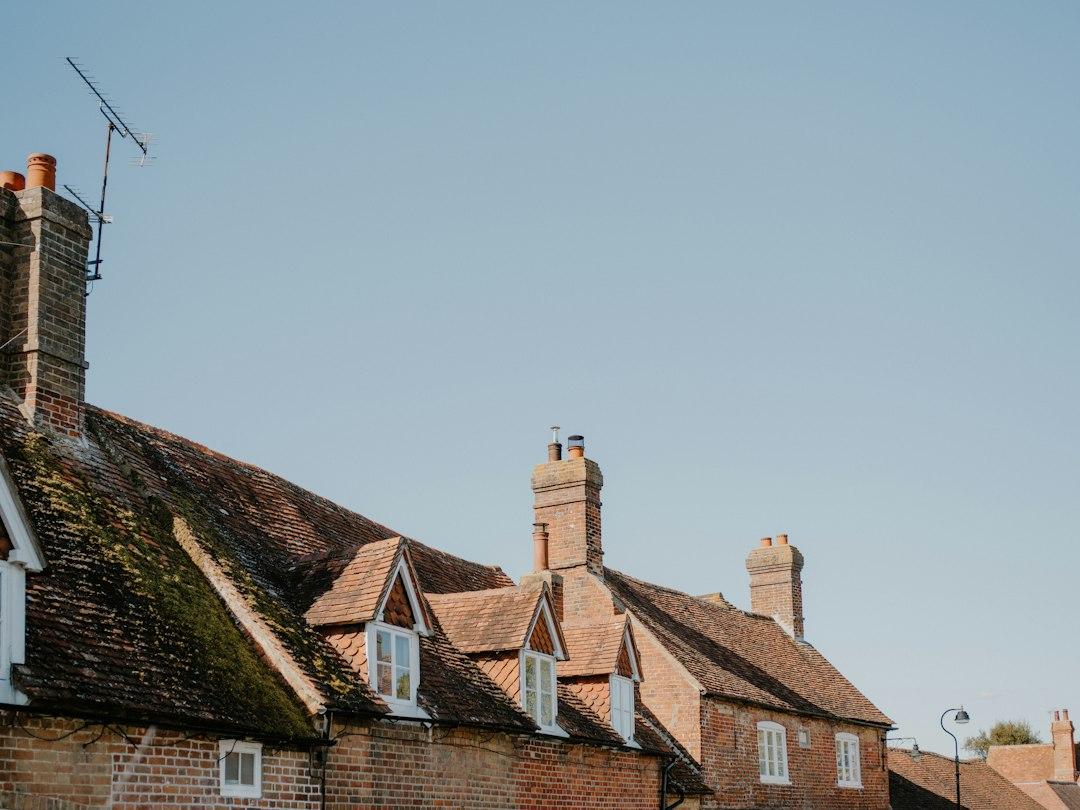
- From the roofline. Everything exposed above the roof is rebuilt. This is the rebuild we quote most on older houses, because the exposed section takes all the weather and, in an earthquake, all the whip.
- Below the roof. Damage continues into the attic or lower. This is major structural work, and it is uncommon.
The brick shell and the flue are separate problems. A chimney can have a perfect flue inside failing brick, or cracked tiles inside brick with decades left in it.
How the wrong one gets quoted
Three ways, mainly.
A contractor without a camera sees cracked mortar outside and assumes the worst inside, or the reverse. A company that only installs liners tends to see every chimney as a liner job. And a quote written after a ten-minute visit picks the remedy that covers every possibility, which is the largest one.
None of that requires bad faith. It only requires that nobody filmed the flue and nobody put a hand on the bricks.
The evidence that separates them
For the flue, the evidence is a Level 2 inspection at $415. The camera records every tile and joint, and the stills show which tiles are cracked, how badly, and how high up. One cracked tile at the top and twelve cracked tiles all the way down both appear on a quote as "cracked flue tiles".
For the structure, it is a close look on the roof and in the attic:
- Does the stack lean, or has it moved relative to the roof around it?
- Do bricks shift under hand pressure? Is mortar missing deep into the joints, or only weathered at the face?
- Are there stepped cracks running through several courses?
- Where the chimney passes through the attic, is the brick tight or cracked?
Westminster's older chimneys have been through real shaking, including the Whittier Narrows quake of 1987 and the 1994 quake. The evidence of that is usually either plain at the roofline or absent. It is rarely subtle.
What decides the price of each
Neither job has a list price with us. Both get a written quote drawn from the footage and from measurements taken on the roof.
A liner quote turns on how tall the flue is, what burns below it, whether the flue runs straight or has an offset, and whether damaged tile must be removed first. An open fireplace, an insert and a gas appliance each need a different liner, so the quote should name the appliance.
A rebuild quote turns on how many courses come down, how the roof is reached, whether the original brick can be matched or reused, and the crown, flashing and cap, which all have to be redone when the top comes off. A rebuild from the roofline usually involves a city permit, and the quote says so on a line of its own.
If you are holding one of these quotes, or both, use the form on this page and tell us what each one lists. We will say whether a camera inspection would settle it and what we would need to see on the roof.
When the answer is both, or neither
Sometimes the camera shows broken tiles and the roof shows loose brick. Then the order matters: structure first, because a liner installed in a stack that is later rebuilt gets disturbed or redone. A single quote should cover both, in sequence.
And sometimes the answer is smaller than either quote. A few cracked tiles near the top, within reach from the roof, can in some cases be handled as part of crown and top-course work. A flue serving a gas log set has different needs from one serving a wood fire. A fireplace the owners never intend to light may need only a cap and a sound crown to keep water out. A second look exists to find those cases, and to say so plainly when the big quote was right after all.
Questions worth asking whoever quoted
Before paying for our inspection, you can test the quote you already have. Ask the contractor for the flue footage, or for stills with heights marked. Ask how many tiles are damaged and where. Ask how far down a rebuild would go and what was seen that sets that depth. Ask whether a permit is included. Clear answers to all four suggest the quote was built on evidence. Vague ones suggest it is worth getting footage of your own.
Getting the footage
A second-look inspection in Westminster, Fountain Valley, Huntington Beach or Buena Park starts on the contact page. Give us the gist of the quote in your hand and we will arrange the camera.
Holding Paperwork That Says the Same?
Mulberry inspects the chimney, photographs every finding and then marks each line of your quote as needed, able to wait or unsupported. Visits run from Westminster to Fountain Valley, Huntington Beach, Buena Park and the rest of Orange County.