
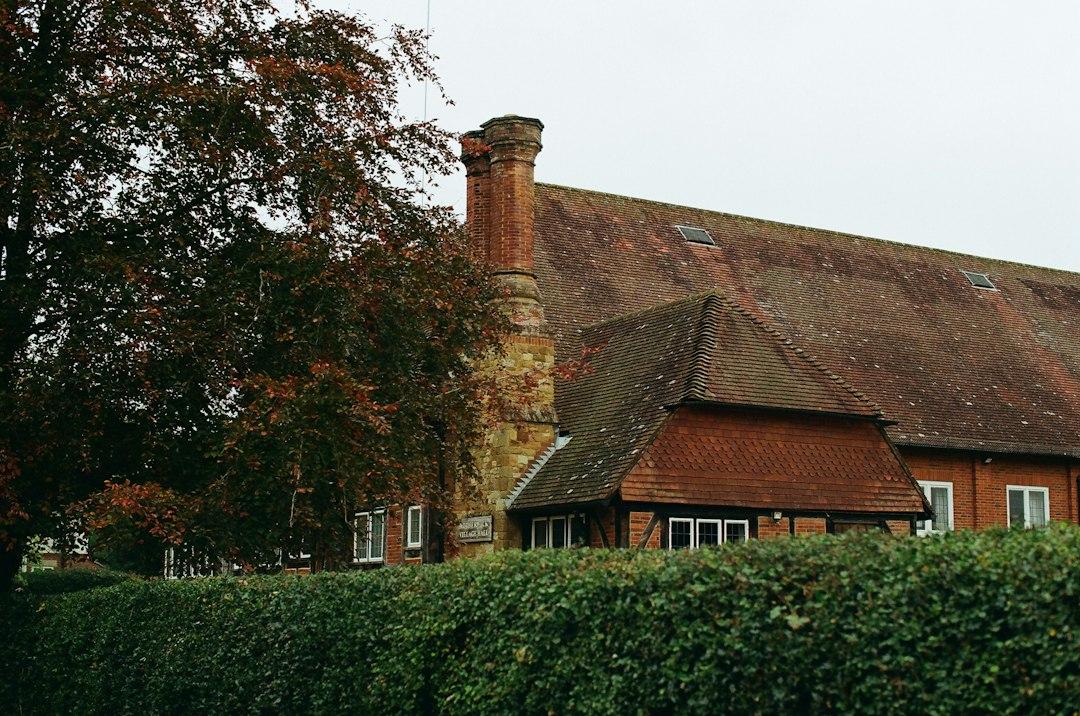
Does this chimney repair need a permit?
Quote says 'to code'?
Give the address and the items on your report or quote. We answer with which ones we would look at first and why.
The permit question, answered first
Whether a repair needs a permit is decided by the building department of the city the house stands in, not by the contractor and not by us. For a Westminster address that means the city's building division. Before a quote of ours is final we put the scope to that counter, and the answer is written on the quote as its own line.
Across the Orange County cities we work in, the answers tend to fall into three groups. Treat the list below as the usual pattern, not as a ruling for your address.
- Seldom needs a permit: sweeping, a replacement cap, sealing a crown, repointing joints, swapping a damper, a new chase cover, water repellent.
- Usually needs one: rebuilding a chimney at or below the roofline, structural bracing, a gas insert or new gas line, a direct-vent fireplace in a new spot, a wood-burning insert or stove.
- Depends on the scope: relining a flue, recasting a crown as part of larger masonry work, and flashing replaced during a roofing job.
How sign-off runs when a permit is involved
The permit is issued before work starts. On structural jobs the city's inspector may want to see the work at a midpoint, before new masonry or framing hides what is underneath, and again at the end. On gas work the inspector looks at the gas connection and the venting. We schedule our own work around those visits, since anything covered up too early may have to be opened again.
The job is closed when the city records its final approval against the permit. You keep three things together: the permit with its final sign-off, our completion note, and the before and after photos. A future buyer's agent or an insurer asking about the chimney can be answered from that folder.
A failed Level 2 is a list, not a verdict
Reports that fail a chimney tend to put everything in one column: a missing cap, a cracked tile, a rusted damper and a stain in the attic, all given the same weight. Read like that, the natural reaction is to price the whole column, and that is how owners end up holding a quote several times larger than the problem.
Our second look puts each item beside its photo and into one of three groups. Some have to be fixed before the fireplace is lit again. Some can sit for a season or two with an eye kept on them. Some are marks of age that need nothing. Only then do prices and permits get attached, starting with the first group.
What 'up to code' means on a chimney built decades ago
As a general rule, an existing chimney is not required to match the code written for new construction just because the code has changed since it was built. Two things alter that: a condition that is unsafe as it stands, and new work. Whatever is repaired or replaced today has to meet today's requirements for that piece of work.
So a line on a report saying a chimney 'does not meet current standards' can mean a hazard, or it can mean the chimney is simply older than the standard. The photo usually settles which. Where it does not, we say what would have to be opened or measured to find out.
List prices for the usual fixes
These are the repairs we publish figures for, except the cap, which is quoted after we measure. Permit fees, where one applies, are the city's and appear separately on the quote.
- Second-look camera inspection of one flue
- $415
- Finding a chimney leak and repairing its source
- $595 to $3,550
- Water diverter framed uphill of the chimney
- $475 to $1,075
- Diverter built and the chimney flashing renewed
- $715 to $1,750
- Wood-burning opening converted with a gas insert
- $2,950 to $5,950
- New screened cap fitted to the flue
- Quoted after we measure
Crown work, relining, dampers, chase covers and stand-alone flashing carry no list price. Each one gets a written quote drawn from measurements and photos of your chimney.
Permit and sign-off questions
Who files the permit?
The quote says who in its permit line. On most jobs the contractor doing the work files it, and an owner may file for their own house. Either way it is issued before anything is taken apart.
A contractor told me no permit is needed. How can I check?
Ask the building department of the city the house is in, and describe the work, not the name of the job. 'Rebuild the chimney from the roofline up' gets a clearer answer than 'chimney repair'. Our scopes are worded so that counter can answer them.
Does a permit change the price?
The city's fee is listed separately from labor and materials. Visits by the city's inspector can also lengthen a job, which the quote notes where it applies.
Does the city require the Level 2 inspection?
No. A Level 2 is ordered by an owner, a buyer or an agent to learn the condition of the flue. The city inspects permitted work, which is a different visit by a different person.
My quote lists ten items 'to code'. Do all ten have to be done?
Often not. Some will be hazards, some will be age, and the report alone rarely shows which. A camera inspection at $415 sorts them with photos before you commit to the full list.
What should I have in hand when the work is closed?
The permit showing final approval if one was required, our completion note, and the before and after photos. Keep them with the house papers.
Not sure which items on the list are real?
Write to us through the contact page with the address and what the report or quote lists. We reply with the items we would check first, whether a permit is likely, and the price where we publish one.
Call (657) 221-6106